On Wednesday 8 July I helped convene a day of events on reimagining and reclaiming AI for London Data Week. Following the global launch of the AI Resist List, it feels there’s been a real buzz around the importance of shaping an alternative narrative for AI. We’ve had coverage in Tech Policy Press, Democracy Now and AI Weekly, while co-creator Karen Hao has discussed the List’s impact on Channel 4 News and Novara Media.
So it was great to build on that momentum through a day of workshops and panels at King’s College London. The focus was on developing ideas and plans for alternative, grassroots and community-led visions of AI, all inspired and supported by the organisations featured on the the List.
The day was hosted by We and AI, a non-profit I’ve worked with since the start of 2026. Massive shoutout to the amazing Tania Duarte, who founded We and AI six years ago. And the rest of the awesome event team: Aphie Gover, Ayla Taylor, Bruna Martins, Caro Ossa, Cinzia Pusceddu, Connie Jehu, Dylan Orchard, Harriet Humfress, Ismael Kherroubi Garcia, Lovansh Katiyar, Marion Meyers, Mhairi Quiroz-Aitken, Ramla Anshur and Zoya Yasmine. We and AI is a sprawling collective and we work remotely. So it was great to meet members of the wider community in person. And to collaborate with the academics, policy-makers, journalists and practitioners who joined the events.
How the day started
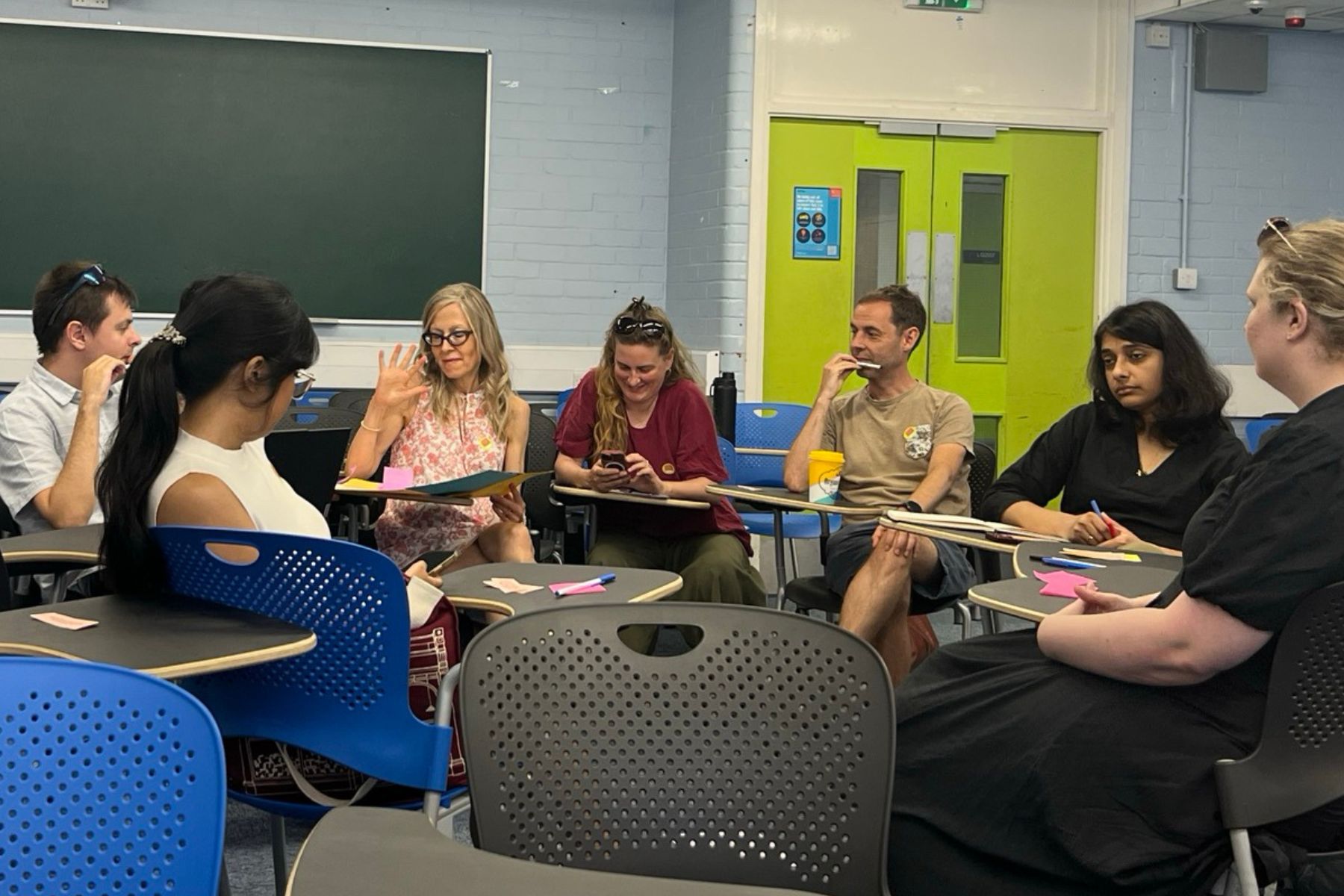
Discussing the future at London Data Week – I’m third from left (Photo: Lovansh Katiyar)
I started the day co-facilitating for Ismael’s session on Crafting Participatory Tech Futures. The aim of the workshop was to debate, reflect on and ultimately articulate future technology scenarios. These had to be sustainable, equitable and resilient. The process of collective imagining was a challenge in itself, especially when we had to develop stories to link our diverse futures together. But it was enjoyable and highly collaborative.
My group imagined that in 150 years time (2176):
- climate change will be reversed
- wealth will be redistributed
- we’ll have a new world order (post-capitalist)
- AI research + deployment will be for social benefit (not profit)
Unfortunately we couldn’t agree quite exactly on how we were going to get there! It’s an interesting exercise that highlights the importance of collective imagination (and our lack of imagination infrastructure).
After lunch
In the afternoon I joined Dylan’s Zine Against the Machine workshop. The brief was to make our own individual zine – a tiny booklet on a topic we were passionate about – from one sheet of A4 paper. We used a template like this one. (I had to dig around a bit to find the creator and original artist seems to be Seleena Laverne Daye). We had just over an hour. It was fun, and nice to focus on something non-digital and paper-based. I felt like I was back in Design Club, cutting up magazines, drawing and colouring in. We sat around in small groups and chatted. I love that feeling of parallel play. Why do people tend to share deep emotions and experiences while doing creative or menial tasks together? (Apparently it’s something to do with lack of eye contact).
The final session was the AI Resist List (UK launch). Tania and Marion did a great job of telling the story behind the List’s creation, and setting out plans for the future. Marion explained that the Resist List wanted to focus on hope. It’s not easy when the biggest AI companies have huge amounts of money, and the powerful people behind them have huge influence, to remember that we do have a choice in the future direction of AI. The Resist List sets out to showcase the thousands of organisations and individuals globally who are resisting, refusing, reimagining and reclaiming AI.
I was one of around 20 speakers invited to give a lightning talk (3 minutes!) highlighting some of these initiatives. I talked about my involvement with the No Palantir in the NHS campaign (read more about my project on Palantir). It was a special privilege to be on a roster of speakers that included critical AI luminary Timnit Gebru and feminist ethnographer, LC De Shay (who both joined remotely).
We were on the top floor of a very old building (no air conditioning) on one of the hottest days of the year. Despite the heat, many people made it through to the end.
Kudos to all who stayed!
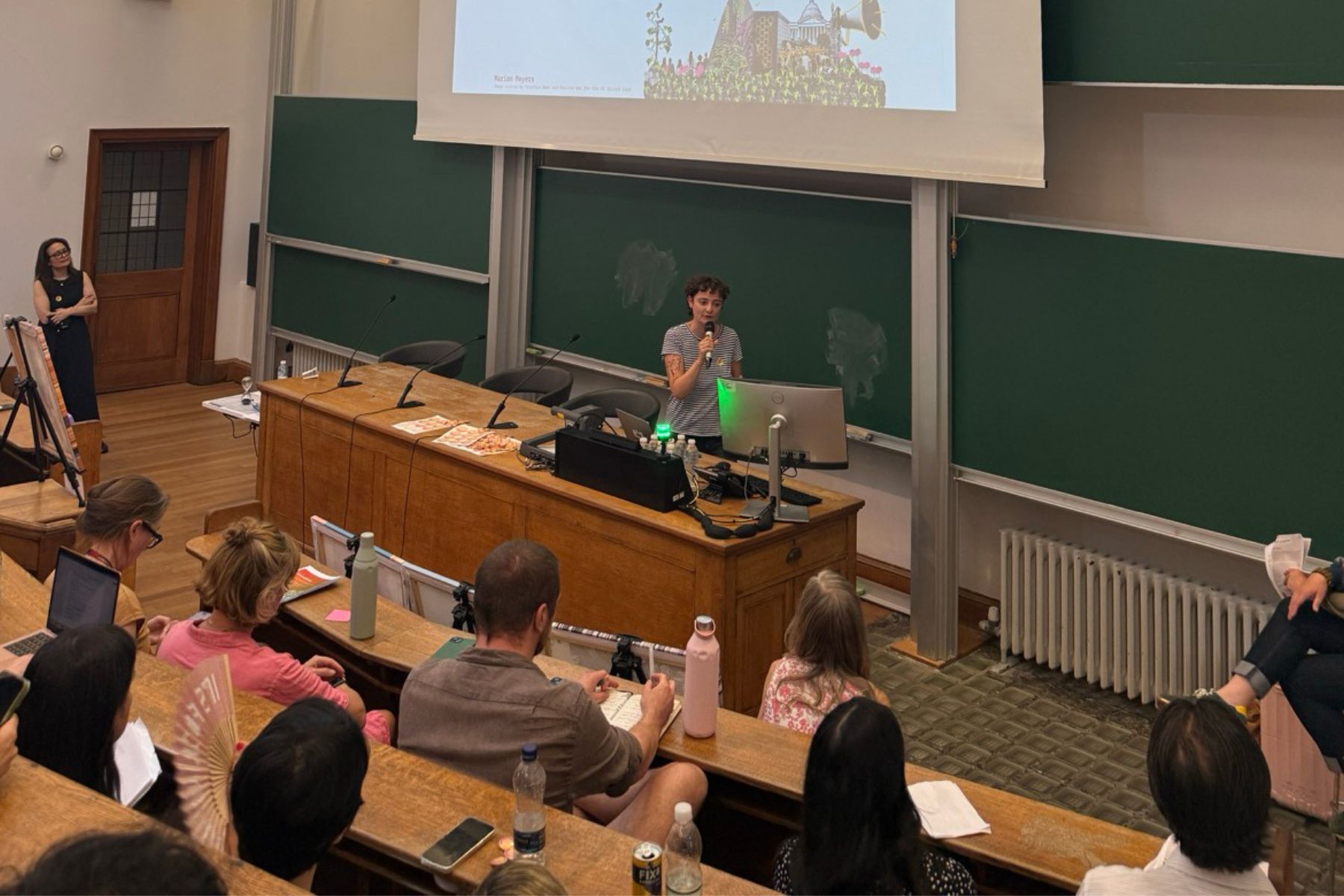
Marion Meyers presents the AI Resist List to a very hot audience (Photo: Connie Jehu)
Feeling positive
During the day I met a UX designer who told me they were very concerned about the growing “AI-speak” in government digital teams. In the old days the focus was on agile and listening to users and iteration. Now there seems to be an increasing belief that AI can simply solve – and do – everything. This uncritical trust in the hype and over-reliance on one solution is skewing design practice away from actual user needs.
The AI Resist List may be premised on hope – but we can’t simply hope things will change for the better. We need to actively build a coalition around alternative visions. And support, empower and bring together the people who are challenging the dominant narratives of large language AI inevitability. After seeing the high attendance and warm response to this day of events, I’m feeling positive.
Main image: Nadia Piet & Archival Images of AI + AIxDESIGN / Limits of Classification / Licenced by CC-BY 4.0 – one of many artworks on display in the lecture theatre during the AI Resist List launch, from the hugely popular (and free to use!) Better Images of AI library.